TL;DR: “Breaker keeps tripping” is not enough information to book the right job. Ask about danger first, then the device, timing, and what changed before you decide whether to dispatch an emergency response, a diagnostic visit, or a routine service call.
A tripped breaker can represent several different calls
The words “breaker keeps tripping” describe a symptom, not a job. Before you put the address on the schedule, find out what trips, when it trips, and what was happening at the time.
ESFI’s AFCI and GFCI Performance Survey from May 2022 gives you a useful service-call reference point, with a clear limitation. It surveyed 100 electrical contractors in Massachusetts about calls they had responded to from the start of 2020 to that point. Massachusetts had adopted the 2020 NEC with AFCI requirements for the entire home. This was a Massachusetts survey based on contractors’ own estimates. It was not California data and it was not a measurement.
Those contractors personally responded to an average of 27 service calls a week. An average of 15.9 calls, or 59 percent, involved tripped breakers or fuses.
When asked what caused most or all of their breaker-trip service calls across all breaker types, the contractors estimated:
- Overloads and short circuits: 68 percent
- Arc faults: 18 percent
- Ground faults: 10 percent
- Defective devices: 4 percent
That split does not tell you what is happening at a particular California home. It does tell you why “the breaker keeps tripping” should start a phone process, not end one.
An overload means there is too much load for the circuit. A short circuit means a hot conductor is touching a neutral or ground. A ground fault means current is leaking to ground, often because of moisture. An arc fault means a damaged or loose conductor is sparking.
GFCI and AFCI devices trip on the last two conditions. A standard breaker trips on an overload or short.
Ask about danger before you ask which breaker tripped
The first question is not whether the device has a test button. It is whether anyone is in immediate danger.
Ask whether the caller smells burning, sees scorch marks or discoloration at an outlet or the panel, hears buzzing, sees sparks, feels heat at the panel, or sees water at the panel.
If the answer is yes, this is your shop’s emergency process. It is not a normal booking.
Tell the caller to leave the breaker off and stay away from the panel. Tell them not to open the panel. If there is fire, tell them to call 911. Follow the shop’s escalation rules and use your emergency instructions, including your electrical emergency triage process.
The order matters. Do not begin by asking whether the caller has a standard breaker, a GFCI, or an AFCI. Danger comes first, before anything about which breaker.
Wirewoman answers 24/7 and asks the danger question first. Answers involving smell, sparks, heat, or water at the panel go through the shop’s own escalation rules. Wirewoman asks and records the answers. You decide what the electrical condition requires.
A caller who says, “It smells hot at the panel,” has not given you a routine breaker-trip lead. They have given you an emergency answer that needs to follow the process you already set for the shop.
Ask which device is actually tripping
If there is no danger answer, ask the caller to identify the device.
Is it a standard breaker? A GFCI outlet or breaker with test and reset buttons? An AFCI breaker?
This question changes the next questions and the likely type of service call.
A GFCI that has popped in a bathroom, kitchen, garage, or outdoors points toward moisture or a failing device. Ask whether it resets and holds. If one GFCI resets and holds, the call is low urgency. That does not tell you the cause, but it helps separate that call from one where the device trips again immediately.
An AFCI trip points toward a damaged cord, loose connection, or arcing. Ask what is plugged into the circuit and whether a particular appliance or cord was in use when it tripped.
A standard breaker points toward load or a short. The caller may not know those terms. They do not need to. You need the answers that separate the possibilities.
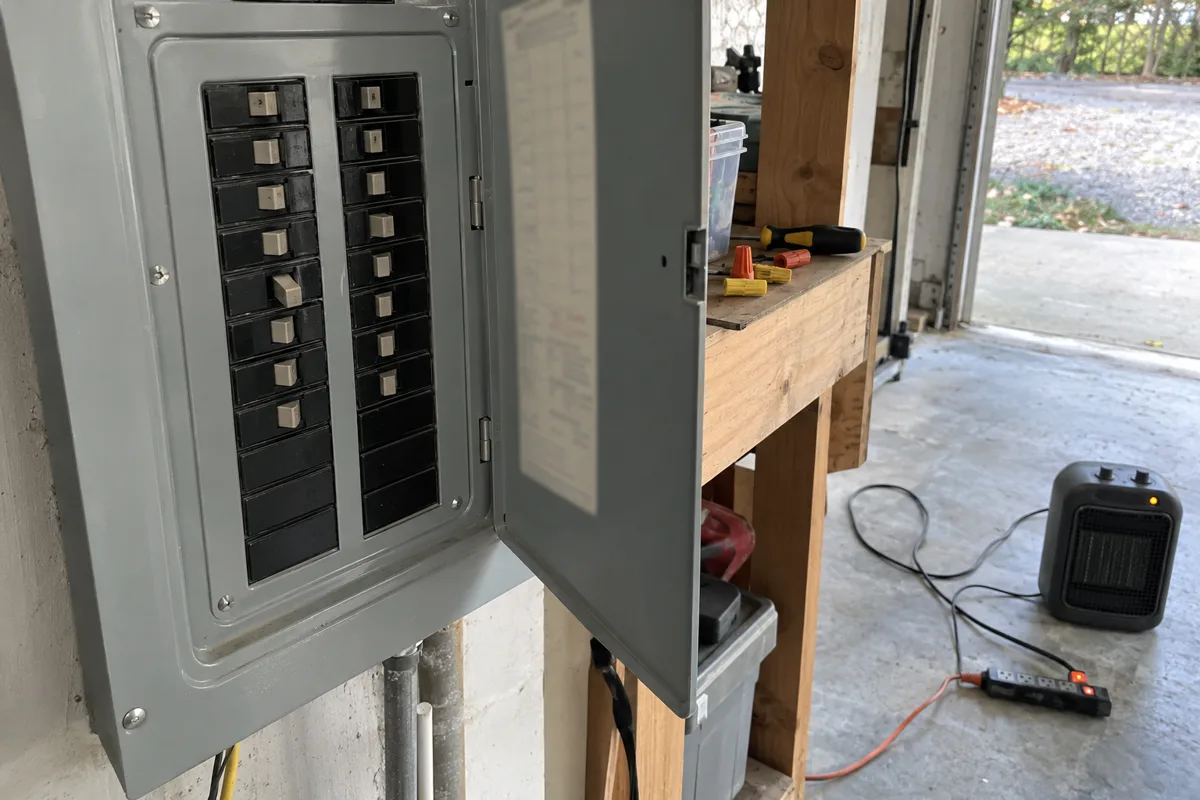
Ask the caller to describe the device if they are unsure. Test and reset buttons point toward a GFCI. The type of breaker and the label on the panel may help identify an AFCI. Do not have the caller open the panel. Your call process should collect what the caller can safely see without turning the conversation into a panel inspection.
This is also where a half-house-no-power call can split from a single-circuit call. If the caller reports a broader loss of power rather than one tripping device, use the questions in your half-house power call process. Do not treat every power complaint as the same booking.
Ask when it trips, not just whether it trips
The timing gives you a different job signal.
If the breaker trips instantly when the caller resets it, that suggests a short or ground fault. Tell the caller not to keep resetting it. If it trips again immediately, leave that breaker off and book soon as a diagnostic visit when there is no separate danger answer.
Repeated resets are a signal, not a fix. This is shop policy advice, not a promise about the cause. The phone process should stop the caller from turning a recurring trip into repeated resets while waiting for the electrician.
If the device trips after minutes or hours with something running, that suggests an overload or a failing appliance. Ask what was running when it happened. Ask whether unplugging everything on that circuit changes the result.
If it trips only when it rains, record those exact words. Weather-related timing is different from a call where it trips when the microwave and toaster are on.
If it trips only when one specific thing is plugged in, record the item. The caller’s answer may point toward a failing appliance, a damaged cord, or an overloaded circuit, depending on the device and timing. You are not asking Wirewoman to decide which one it is. You are giving the electrician the facts needed to decide what to inspect.
An instant trip with no known cause is a diagnostic visit. An overload pattern with a clear culprit is an ordinary scheduled call and a conversation about a dedicated circuit or panel capacity. Use your panel upgrade call questions when the answers point toward capacity rather than an emergency.
Do not quote a price for an unknown cause on the phone. Book a diagnostic visit. The caller is reporting a symptom, and the electrician still needs to determine the cause.
Ask what changed and how often it happens
The fourth question is about time and change.
Ask how long the problem has been happening and how often the breaker or device trips. Then ask what changed before it started.
The change could be a new appliance, a space heater, an EV charger, holiday lights, a remodel, or a recent visit by another contractor. Ask whether the problem began after one of those events.
A new appliance or space heater combined with trips after minutes or hours and a clear circuit connection supports an overload pattern. That call can be scheduled normally, with a discussion about a dedicated circuit or panel capacity.
Holiday lights create a separate phone pattern worth recognizing. Ask what else is running on the circuit and whether the trips happen only when the lights are connected. Your holiday lighting call process can keep those questions consistent during the season.
If the problem began after a recent job your shop performed, treat it as a warranty-callback question rather than a fresh, unknown lead. Use the warranty callback call process and keep the caller’s timing in the record.
The record should preserve the caller’s own words. “It trips when it rains” and “it trips when the microwave and toaster are on” are different sentences pointing at different jobs. Reading the actual words the caller used in the summary tells you which job you are driving to.
That detail matters after the call ends. A generic note such as “breaker issue” leaves the electrician with the symptom and removes the timing. The caller’s sentence keeps the trigger attached to the service call.
Let the four answers decide the booking
Once the four questions are answered, sort the call by response.
Danger answer: Use the emergency path. Tell the caller to leave the breaker off, stay away from the panel, and not open it. Tell them to call 911 if there is fire.
Instant trip with no known cause: Book soon as a diagnostic visit. Tell the caller to leave that breaker off and not keep resetting it.
Overload pattern with a clear culprit: Book an ordinary scheduled call. Set the expectation that the conversation may involve a dedicated circuit or panel capacity.
One GFCI that resets and holds: Treat it as low urgency, while recording where it is and what was connected when it tripped.
Recent job by your shop: Check whether it belongs in the warranty-callback process before treating it as a new service call.
Wirewoman sends the electrician an SMS job summary within 30 seconds with the answers. It logs every call to a dashboard. That gives the shop a record of the danger answer, the device, the timing, and the change the caller reported.
The shop’s after-hours rules should match the booking decisions. Put these questions and escalation rules into the after-hours call policy for your electrical shop. The point is not to have every caller receive the same response. The point is to have the same facts collected before the response changes.
Change the phone script from symptom to decision
Do not let the phone record stop at “breaker keeps tripping.” Make the first recorded question the danger question. Then record the device, the timing, and what changed.
Do not have callers open the panel. Do not tell them to keep resetting a breaker that trips again immediately. Do not quote a price when the cause is unknown.
Use the caller’s exact words in the SMS summary. “It trips when it rains” is the information the electrician needs to see. So is “it trips when the microwave and toaster are on.”
Then book from the answer pattern: emergency process for danger, a diagnostic visit for an unexplained instant trip, a scheduled call for a clear overload pattern, and low urgency for one GFCI that resets and holds.