Short answer: California’s Net Billing Tariff (NEM 3.0) changed how exported solar power is valued, generally well below the retail rate NEM 2.0 customers received during common midday export hours. That doesn’t mean every solar system needs a battery, solar-only can still make sense depending on load shape, rates, and system size, but it does mean storage can materially improve project economics for a lot of customers. The state’s Self-Generation Incentive Program (SGIP) can substantially reduce battery costs for customers who qualify under a currently funded category, though availability varies sharply by customer type, territory, and budget. Both are worth understanding before you’re standing in the driveway quoting a job.
What actually changed under NEM 3.0
NEM 3.0, officially the Net Billing Tariff (NBT), applies to PG&E, SCE, and SDG&E customers who submitted their interconnection application on or after April 15, 2023. Under NEM 2.0, exported solar was credited close to the retail electricity rate. Under NBT, export credits are based on the value of that electricity to the grid, and they vary substantially by hour, season, and utility. They’re generally much lower than retail rates during the hours most residential solar exports, but not always: certain evening hours can carry much higher export value, and PG&E and SCE NBT customers may also qualify for a temporary export-compensation adder.
The practical effect: solar power a homeowner uses themselves still saves them the full retail rate. A system whose production substantially exceeds onsite daytime consumption may get less value for those exports than it would have under NEM 2.0. That’s a system-design and usage-pattern question, not a rule that applies the same way to every roof.
Why storage is worth the conversation
Export values under NBT tend to be lowest around midday, when solar production is highest, and can be higher in the late-afternoon and evening hours. Storage lets a homeowner shift the power their panels generate at noon into those higher-value hours instead of exporting it at the lowest rate of the day. Done right, that shifting can meaningfully improve a system’s economics by increasing self-consumption and moving exports to better-priced periods.
That’s the honest version of the pitch: not “solar without storage under-delivers,” but “storage can improve the value of solar under NBT by shifting production away from low-value export periods, here’s what that looks like for your usage.” Homeowners who got a solar-only quote elsewhere, or who installed under NEM 2.0 and are now asking about adding a battery, are two of the calls this creates. Whether storage is worth it for a given customer still depends on their load shape, rate plan, and goals, and that’s worth actually modeling rather than assuming.
The incentive: SGIP
The Self-Generation Incentive Program, run through the California Public Utilities Commission (CPUC), can substantially reduce battery costs for customers who qualify under a currently funded category, but availability varies sharply by customer type, territory, and budget. It isn’t one flat rebate: funding is split across multiple budget categories with different eligibility, incentive structures, and rates, including tiers for low-income and equity customers and a resiliency tier for customers in high fire-risk areas who need backup power during Public Safety Power Shutoff events. SGIP is administered by PG&E, SCE, SoCalGas, and the Center for Sustainable Energy for SDG&E territory. Certain newer SGIP funding categories also extend to publicly owned utility territories, including LADWP, under separate program rules (CPUC, Self-Generation Incentive Program).
A few things matter operationally:
- Funding procedures aren’t uniform. Depending on the applicable SGIP rules for a given budget category and application period, projects may be funded first-come, by lottery, or from a waitlist. Don’t tell a customer a specific process applies without checking the category they’d fall into.
- The incentive amount depends on more than territory. Applicable budget category, eligibility, project characteristics, available funding, and in some cases incentive step or program administrator all factor in. Some categories use flat rates; general-market storage has historically used step-down rates as funding is claimed. Quoting a specific SGIP dollar figure from memory is how installers end up walking back a number they already gave a customer. Check current budget availability before you quote it.
- Don’t assume a category is open. Some major residential equity funding has already been heavily subscribed in 2026. Contractors should check live SGIP budget status before presenting it to a customer as an available incentive, not rely on how the program looked on a job from a few months back.
What this means for how you quote
- Model self-consumption, don’t default to maximizing system size. Optimizing size around a customer’s actual load and how storage would be operated can sometimes produce better economics than simply maximizing solar capacity, but it depends on the specifics, not a rule of thumb.
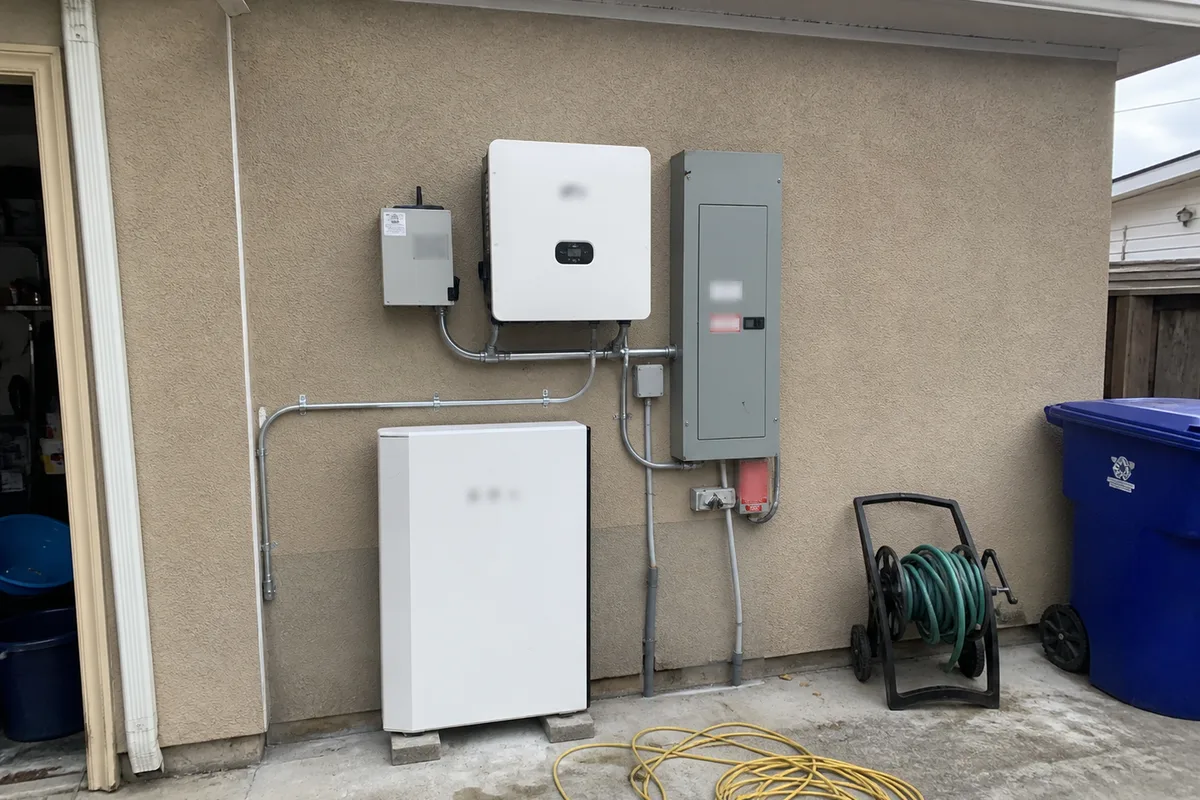
- An existing NEM 2.0 customer can generally add battery storage without losing NEM 2.0 status. If the proposal also changes the generating system itself, not just adding storage, verify the utility’s current modification and interconnection rules before quoting the job.
- Check current SGIP eligibility and funding status before quoting the incentive. Budget categories, rates, and available funding change; point customers to CPUC resources for their utility rather than a number you remember from a prior job.
- Storage retrofits are their own sales category now, including for customers who already have solar and are coming back to ask about batteries.
The rule change already happened, and the underlying economics genuinely shifted. The contractors who can explain accurately what changed, and what a given customer actually qualifies for, are in a better position than the ones running the same solar-only pitch they used before 2023.